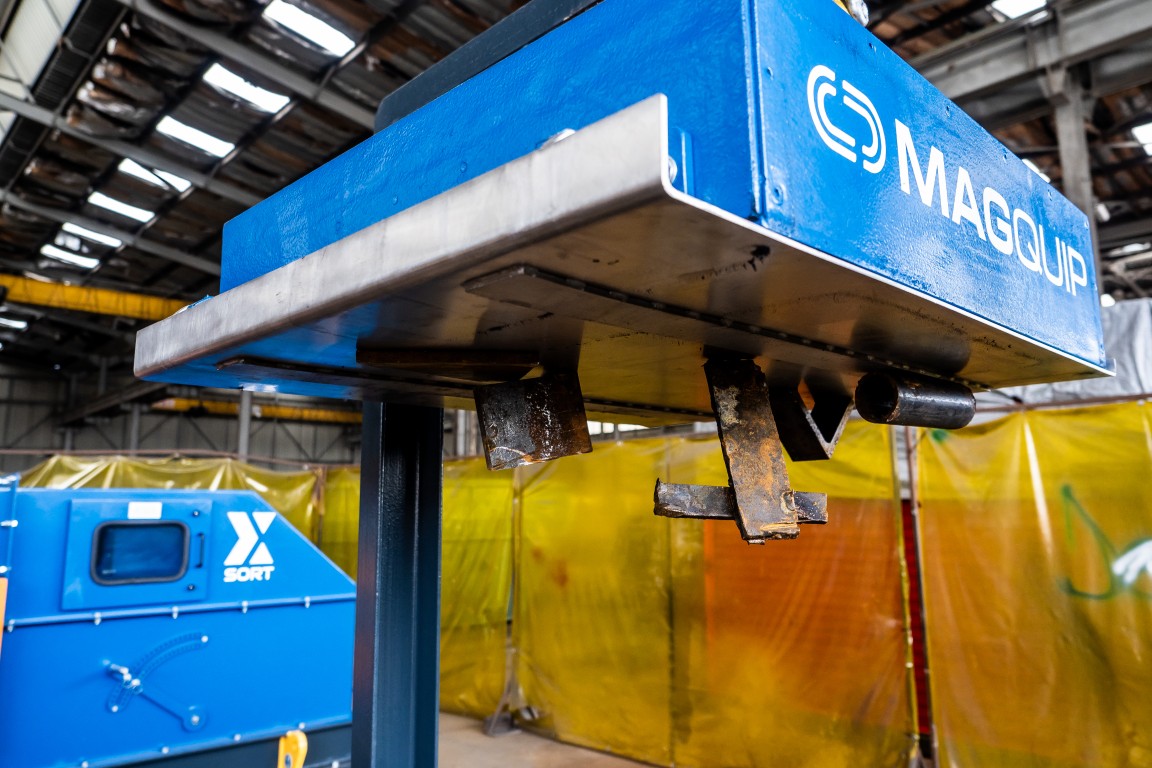
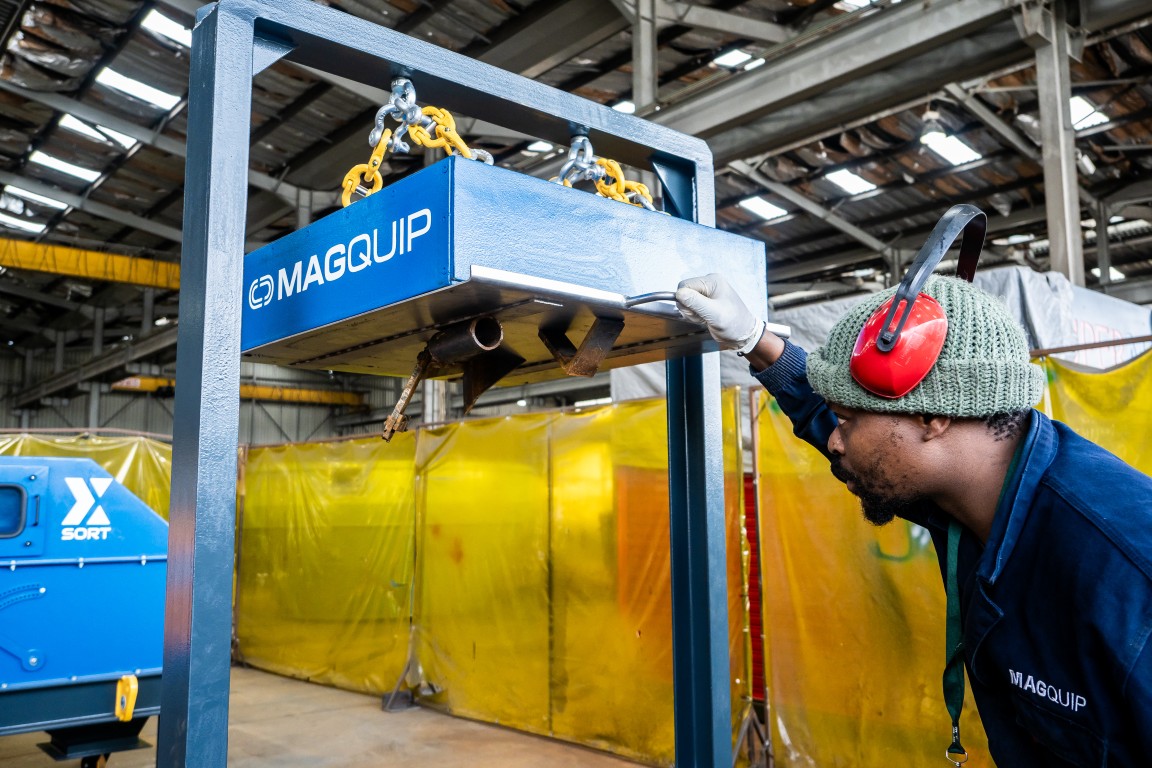
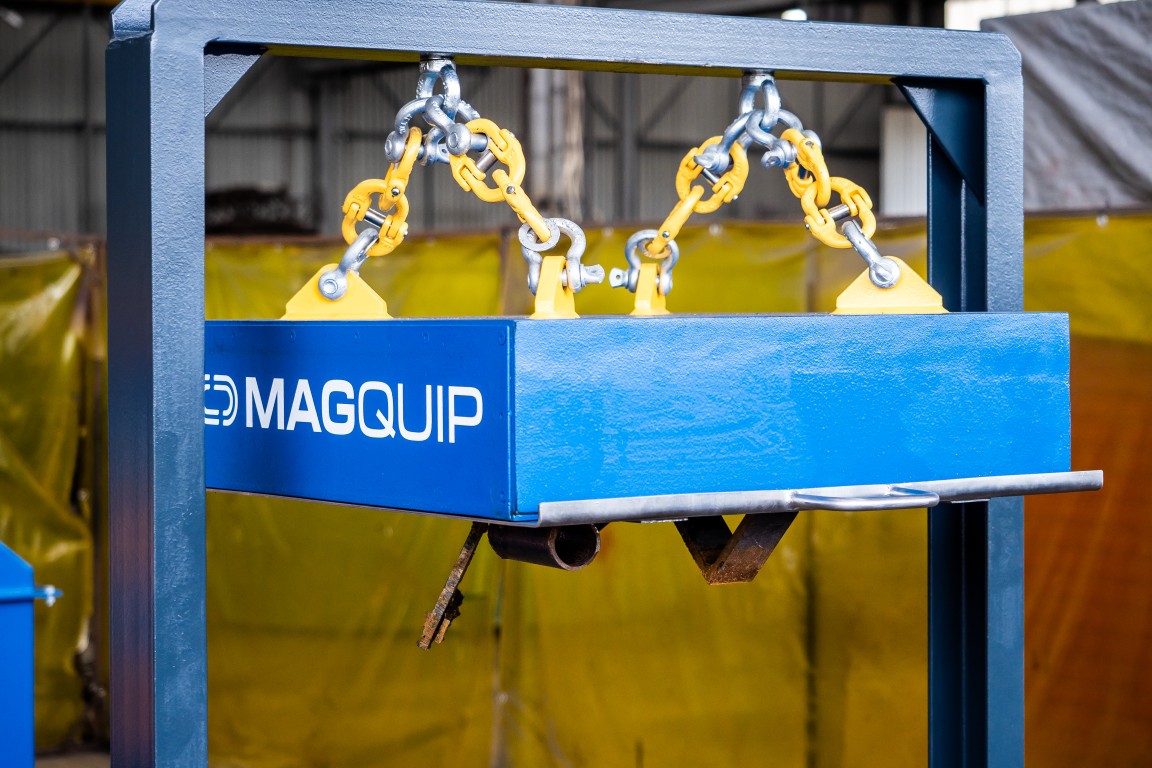
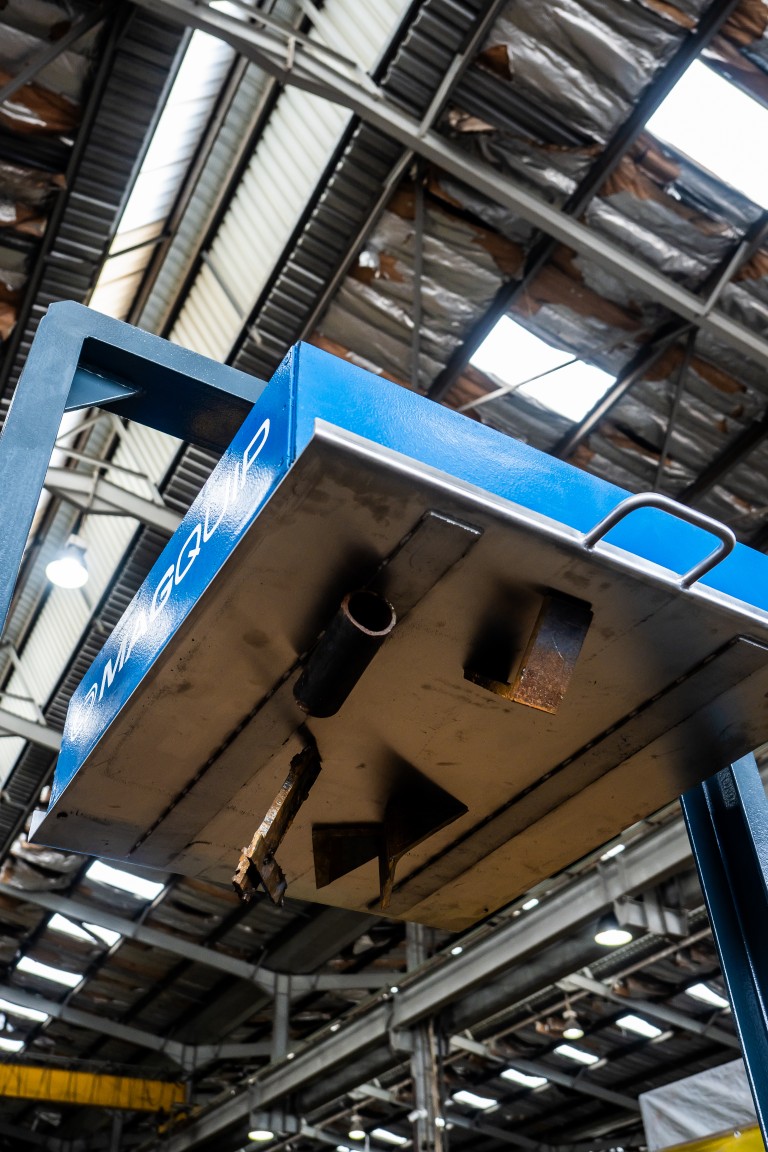
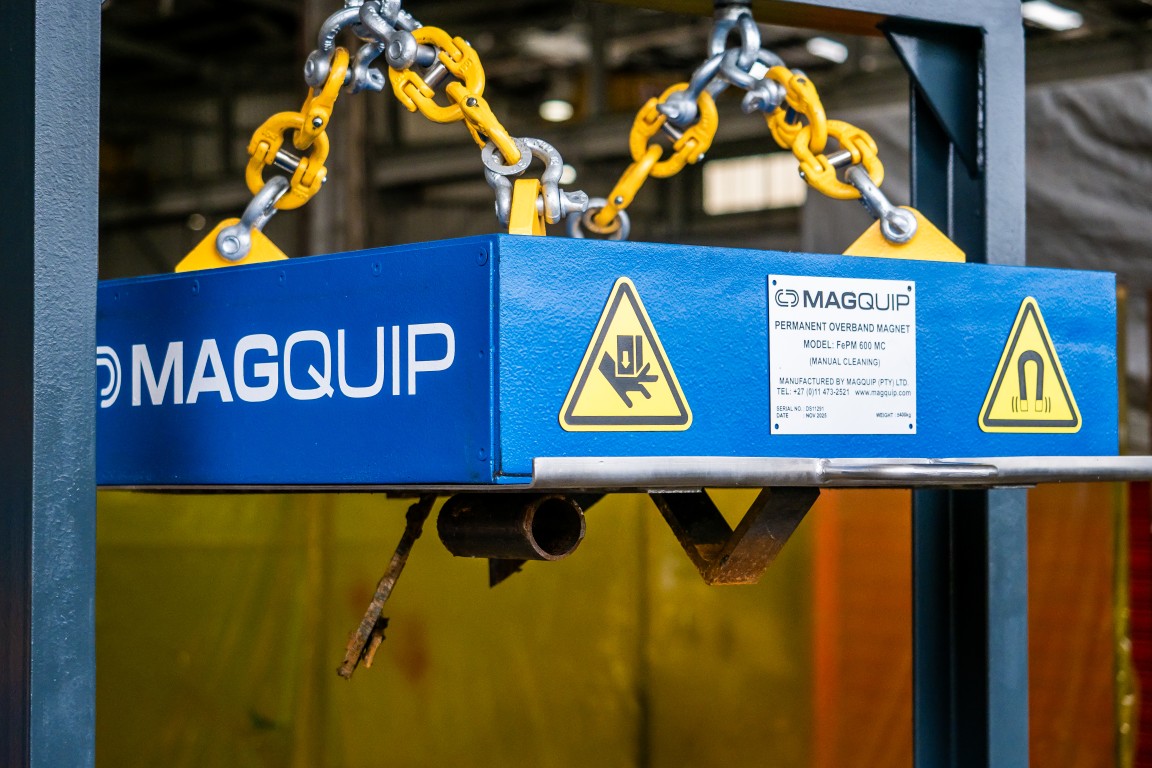
A zero-power, manual-clean suspension magnet engineered to remove tramp ferrous metal and protect crushers, screens, shredders and downstream equipment.
REMOVE TRAMP IRON BEFORE IT REACHES CRITICAL EQUIPMENT.
MAGQUIP Tri-Pole Permanent Suspension Magnets remove tramp ferrous metal from bulk material streams before it can damage crushers, screens, shredders or mills.
Installed above conveyors, vibrating feeders or discharge points, the three-pole magnetic circuit creates a broader, deeper-reaching field across the full belt width—without electrical power.
+ Metal recycling
+ Construction & demolition waste
+ Quarrying and aggregates
+ Mining and bulk materials handling
TRI-POLE ADVANTAGE
STRONGER WHERE IT MATTERS.
Three magnetic poles deliberately distribute lifting force across the working face, improving centreline pull, field penetration and capture of smaller or irregular ferrous contaminants at real operating gaps.
3
MAGNETIC POLES CREATE A BROADER, DEEPER-REACHING FIELD
WHY TRI-POLE
RELIABLE PROTECTION FOR LOWER-CONTAMINATION CONVEYOR APPLICATIONS.
Every feature is focused on dependable tramp metal capture, straightforward cleaning and zero ongoing energy demand.
01
ZERO POWER
Permanent magnetic performance with no electrical supply, cooling system or energy cost.
02
DEEP, UNIFORM FIELD
The Tri-Pole circuit strengthens centreline pull and extends coverage across the full working face.
03
SIMPLE MANUAL CLEANING
A hinged cleaning plate pulls collected metal away from the magnet face for quick scheduled discharge.
INSTALLATION PROFILE
BUILT FOR LOW-CONTAMINATION DUTY AND CONFINED INSTALLATIONS.
STATIC / SUSPENDED
Manual-clean configuration
A hinged cleaning plate pulls away from the magnet face so captured metal can be discharged during scheduled cleaning.
APPLICATION FIT
Low-contamination streams
Ideal where tramp iron is infrequent and a compact, lightweight magnet is required for limited installation space.
IN-HOUSE ENGINEERING
Construction
ENGINEERED FOR DEPENDABLE MANUAL CLEANING.
The Tri-Pole permanent magnetic circuit combines deep, uniform separation with rugged construction and straightforward scheduled cleaning.
MAGNETIC CIRCUIT
Optimised Tri-Pole permanent magnetic circuit using Strontium Ferrite.
ENCLOSURE
Industrial steel casing protected by a zinc-rich primer and epoxy top-coat system.
CLEANING METHOD
Hinged cleaning plate for manual discharge of collected tramp metal.
POWER REQUIREMENT
Zero electrical power required for magnetic operation.
OPERATING GAP
Up to 400 mm, application dependent.
BELT WIDTHS
Conveyor belts up to 1,800 mm wide.
In the field
REAL INSTALLATIONS. REAL OPERATING CONDITIONS.
Engineer’s questions
FREQUENTLY ASKED.
Selection, installation and cleaning questions for engineering teams planning a permanent suspension magnet application.
The energised coil creates a diverging magnetic field across the conveyor burden. Ferrous objects are attracted out of the conveyed material and retained by the magnet or discharged by the self-cleaning belt.
In-line placement generally provides the best exposure at the head pulley. Cross-belt installation is practical where the head pulley position is inaccessible or where the discharge arrangement suits transverse cleaning.
Self-cleaning is recommended when tramp iron is frequent enough that manual cleaning would interrupt production or create an unsafe maintenance burden.
Provide conveyor width and speed, burden depth, material type and density, maximum lump size, magnet suspension height, contamination rate, installation orientation and available power supply.
Electrical and mechanical components can be specified around site classification and project requirements. Confirm the hazardous-area classification during enquiry.
SEND US YOUR CONVEYOR DATA. WE’LL RECOMMEND THE CORRECT TRI-POLE MAGNET.